Takata, a maker of air bags, has determined that a defect exists in some of its air bag
inflators. Takata has agreed to a national recall of certain types of
frontal driver and passenger side air bag inflators used in vehicles
manufactured by BMW, Chrysler, Daimler Trucks, Ford, General Motors,
Honda, Mazda, Mitsubishi, Nissan, Subaru, and Toyota. These inflators were made with a propellant that can degrade over time
and has led to ruptures that have been blamed for six deaths worldwide.
The action expands the number of vehicles to be recalled for defective
Takata inflators to nearly 34 million.
Is your car on the recall list?
Visit the Vehicle Owners Tab on www.safercar.gov (www.safercar.gov/Vehicle+Owners/) to find out if your vehicle is on the recall list for the defective air bag inflators.
The NHTSA advises that you check your VIN in the SaferCar.Gov VIN search tool periodically as some recalls are not posted publicly or distributed to vehicle owners until weeks after the recall has been issued.
Be sure to check the official website of the automaker for your vehicle regularly as well.
Peace and blessings.
Source: NHTSA Recalls Spotlight - Takata Air Bag Recalls

The Blog
Showing posts with label Money. Show all posts
Showing posts with label Money. Show all posts
Wednesday, May 20, 2015


Saturday, February 28, 2015
The Most Important Thing About Selling A Home
The most important thing about selling a home is the price that a buyer is willing to pay for it. If the price is too high, the home may never sell. If it is priced too low, the seller is giving the home away. The key is to price a home around the dollar amount for what similar homes (in style, age, and condition) have actually sold.
Some things to remember if there are no offers:
Tips:
~~~
t
Some things to remember if there are no offers:
- The selling agents, the agents representing buyers, believe the price is too high.
- If there are showings but no offers, the agents AND the buyers are finding homes that offer better value.
- If there are second showings but no offer - a minor price adjustment is in order.
Tips:
- There should be at least 1 to 2 showings per week.
- Every 10 showings should produce at least one offer.
~~~
t
Wednesday, December 31, 2014
Things To Leave in 2014
One of the greatest ways to make a change is to create a personal agenda. The best way to keep in mind what is wanted is to be confident about what is not wanted:

tnd
- Apprehension
- Chaos
- Detrimental Actions
- Distraction
- Drama
- Foolishness
- Going Nowhere Relationships
- Guilt
- Indebtedness
- Junk Food
- Liars
- Lose-Lose Situations
- Mismanagement
- Obstacles
- Self-Disrespect
- Self-Ridicule
- Self-Sabotage
- Thieves
- Time Wasters
- Unhealthy Environments
- Users
What are you saying goodbye to....?
2015 is the year to do something radically different and better.
tnd
Tuesday, December 23, 2014
Cosigning 101
The holiday season is a time when some feel extra generous with their money and their credit. Some may even feel extra generous with their name.

Cosigning on an account so that someone who is not creditworthy (according to the lender) may obtain something is a dangerous stretch of ice to walk across.
If a person has not demonstrated solid, sensible financial management, then that person may be a direct threat to the cosigner's good credit rating.
Consigning should be done for someone who has demonstrated consistent improvement in financial management including stability, progressively increasing income, and verifiable steps to increase their credit so that way they will be able to open up future accounts under their own good name.
There is also a risk. Although the person has demonstrated great ability in increasing their income and proving their credit worthiness, things can happen. If that person should no longer be able to bring in income or just plain refuse to pay, then ultimately that cosigned account becomes the cosigner's responsibility. In fact, on Day One when the cosigner signs their name on the account, they have already told the world that they are responsible for that account no matter what. So if the account is never paid, it will go into collections under the cosigner's name and ruin the cosigner's good credit.
Lastly, cosigning to an account causes the debt side of the debt to income ratio to rise which may cause difficulty for the cosigner to obtain something for their own household in the future.
tnd
Graphic source: Capitol One
Saturday, December 6, 2014
So I Was Laying In The Bed Early This Morning With My Cell Phone In My Hand...
...and I was doing what I usually do when I have reached for the phone to see what time it is...
...going through the notifications and reminders of what I needed to do today.
One of the reminders were to pay a bill. Before I make any transaction, I check my account to view the balance and if the balance is where it should be.
This morning it was less than what I had thought I had.
I got up, went to the desk, pulled out the registers....time for the daily reconciliation to stay on track.
Looked on the account - two transactions for a Kroger #587 - 43201. Now, I stay in a grocery store and the first thing I'm wondering is what grocery store in Cleveland was bought by Kroger. I hadn't seen Kroger in Cleveland since the 70s. Looked up the store number and verified the zip - yep, in Columbus.
I called the bank. They said that those two transactions were already flagged because they were transactions out of my ordinary mode of purchasing. I asked the representative when did the transactions happen. He told me the time and I told him that I was on a stage in Cleveland when these transactions occurred.
Needless to say, all bank accounts and credit card accounts have been notified and I'm awaiting new cards for all accounts because there were times this week when I had all of my cards in my purse when my purse was not attended - albeit where I discreetly placed my purse during these times.
Minding the Benjamins is a daily task that I practice because some financial institutions do not refund your money or credit your account if the discrepancy is reported after 24 hours.
I reconcile each financial and credit account so that the financial institution and I are always on the same page.
I only bank with national major financial institutions so that matters like these can be resolved quickly with a phone call and if need be a follow-up visit to the nearest branch.
Took an hour and a half out of my morning with all the institutions, but well worth thwarting some low-life thief.
Mind your money cuz somebody else got their mind on it.
...going through the notifications and reminders of what I needed to do today.
One of the reminders were to pay a bill. Before I make any transaction, I check my account to view the balance and if the balance is where it should be.
This morning it was less than what I had thought I had.
I got up, went to the desk, pulled out the registers....time for the daily reconciliation to stay on track.
Looked on the account - two transactions for a Kroger #587 - 43201. Now, I stay in a grocery store and the first thing I'm wondering is what grocery store in Cleveland was bought by Kroger. I hadn't seen Kroger in Cleveland since the 70s. Looked up the store number and verified the zip - yep, in Columbus.
I called the bank. They said that those two transactions were already flagged because they were transactions out of my ordinary mode of purchasing. I asked the representative when did the transactions happen. He told me the time and I told him that I was on a stage in Cleveland when these transactions occurred.
Needless to say, all bank accounts and credit card accounts have been notified and I'm awaiting new cards for all accounts because there were times this week when I had all of my cards in my purse when my purse was not attended - albeit where I discreetly placed my purse during these times.
Minding the Benjamins is a daily task that I practice because some financial institutions do not refund your money or credit your account if the discrepancy is reported after 24 hours.
I reconcile each financial and credit account so that the financial institution and I are always on the same page.
I only bank with national major financial institutions so that matters like these can be resolved quickly with a phone call and if need be a follow-up visit to the nearest branch.
Took an hour and a half out of my morning with all the institutions, but well worth thwarting some low-life thief.
Mind your money cuz somebody else got their mind on it.
Monday, December 1, 2014
Time Management is a Process
Currently:
Through the years, I have attended a plethora of time management seminars either while in Corporate America or of the self-help variety.
I incorporated the tools from all of that training from the Gantt chart, to an iPAQ (a PDA before the smart phone and iPad and in all honesty has some functions that the smart phone and other equipment STILL lack - hint), a Daytimer or Franklin-Covey planner or system, High Performance Academy a spreadsheet, Microsoft Outlook, iCal, or just a good ol' plain notepad and a pen - all to something that would best work for me.
Of all the things out there, it may be difficult to find just one tool or system to keep a busy person on track - thus, time management absolutely requires personal customization.
I created a thorough comprehensive Things-To-Do List to make sure that I complete at least 85% to 95% of what needs to be done to:
I found it easier for my Things-To-Do List to be broken down in the following steps:
This information is revisited nightly as preparation for the next day.
I created a form package that seamlessly assists me in staying on track throughout the day from step to step that may help you in managing your busy day.
Visit www.ladyintelligence.com to submit your request.
Have a great productive day.

tnd
- I am a mother of a busy high school teenager
- I play video games, Play-doh, and hide and seek with my grandchild every weekend
- I am in a musical that will run for about 19 performances with possible media appointments for the month of December
- I began rehearsal for another theater production last week that is set for January through February
- I assist people with real estate matters
- I am working on two new books
- I am booking engagements and holding seminars based on my latest book
Through the years, I have attended a plethora of time management seminars either while in Corporate America or of the self-help variety.
I incorporated the tools from all of that training from the Gantt chart, to an iPAQ (a PDA before the smart phone and iPad and in all honesty has some functions that the smart phone and other equipment STILL lack - hint), a Daytimer or Franklin-Covey planner or system, High Performance Academy a spreadsheet, Microsoft Outlook, iCal, or just a good ol' plain notepad and a pen - all to something that would best work for me.
Of all the things out there, it may be difficult to find just one tool or system to keep a busy person on track - thus, time management absolutely requires personal customization.
I created a thorough comprehensive Things-To-Do List to make sure that I complete at least 85% to 95% of what needs to be done to:
- minimize procrastination,
- avoid distraction, and
- avoid getting behind on any deadlines.
I found it easier for my Things-To-Do List to be broken down in the following steps:
- Priority List - The Main Things I Must Complete Today, No Matter What
- Call List - Organizations and People I Must Reach Out to Today
- Pending List - Things Pending or People I'm Waiting on Before Next Steps
- Money Matters - Daily Checklist of Things To Do To Take Care of The Benjamins (money)
- Project List - A list of projects accompanied with a list of the five big things that need to be done to move a particular project forward
This information is revisited nightly as preparation for the next day.
I created a form package that seamlessly assists me in staying on track throughout the day from step to step that may help you in managing your busy day.
Visit www.ladyintelligence.com to submit your request.
Have a great productive day.
tnd
Sunday, August 17, 2014
"There Is A Thinking Stuff"
A few years ago, I came across the book, "The Science of Getting Rich." In this 104-year-old book, Wallace Wattles talks about a student, a poor man who rented a house, who had only what he had earned for the day. Following the steps outlined in the book, the student thought that it would be reasonable enough to ask for a rug for the best room of his home and for a coal stove to keep the house warm when it was cold outside. Following the steps that Mr. Wattles outlined throughout the book, the student obtained those things in a few months. At the end of it all, the student wound up owning and rebuilding the home.
A year or so ago, I knew that I would like to obtain a new car. Even though I was not in the market and not in the position, I kept having this urge to make up my mind what I wanted. I went back between a sedan and an SUV. I liked the sedan because of the sealed trunk but then I wanted an SUV for the wintry months. I already knew the make and then began making comparisons on the colors of the sedan and the SUV. I started building the car on an app like I was going to buy it the next week. Something just kept pushing me to make up my mind what I wanted. I settled on the color for the sedan. It was done. I made my choice, so when it was time to buy it, which was not in the near future as far as I could see, I already knew what I wanted. I knew that would be what I would get.
In the book, it talks about how thinking about something would have it manifest it some way. For example, if a person wanted a sewing machine, then he or she would "hold the mental image of it with the most positive certainty that it is being made or is on its way..." Then, "have the most absolute and unquestioning faith that the sewing machine is coming. Never think of it or speak of it in any other way than as being sure to arrive. Claim it as already yours." Then the book goes on to say that the sewing machine would come "by the power of the supreme intelligence, acting upon the minds of men."
Sure enough just a few months later, after a series of events from upon the minds of men, I came to begin driving the same make, model, and color of the car that I had decided would be the car "whenever it was time" for me to obtain it.
*Info:
The Science of Getting Rich - Wikipedia
Download of The Science of Getting Rich
The Science of Getting Rich Network
The Science of Getting Rich - CD by Denis Waitley
Reader Reviews from goodreads

A year or so ago, I knew that I would like to obtain a new car. Even though I was not in the market and not in the position, I kept having this urge to make up my mind what I wanted. I went back between a sedan and an SUV. I liked the sedan because of the sealed trunk but then I wanted an SUV for the wintry months. I already knew the make and then began making comparisons on the colors of the sedan and the SUV. I started building the car on an app like I was going to buy it the next week. Something just kept pushing me to make up my mind what I wanted. I settled on the color for the sedan. It was done. I made my choice, so when it was time to buy it, which was not in the near future as far as I could see, I already knew what I wanted. I knew that would be what I would get.
In the book, it talks about how thinking about something would have it manifest it some way. For example, if a person wanted a sewing machine, then he or she would "hold the mental image of it with the most positive certainty that it is being made or is on its way..." Then, "have the most absolute and unquestioning faith that the sewing machine is coming. Never think of it or speak of it in any other way than as being sure to arrive. Claim it as already yours." Then the book goes on to say that the sewing machine would come "by the power of the supreme intelligence, acting upon the minds of men."
Sure enough just a few months later, after a series of events from upon the minds of men, I came to begin driving the same make, model, and color of the car that I had decided would be the car "whenever it was time" for me to obtain it.
"There is a thinking stuff from which all things are made, and which, in its original state, permeates, penetrates, and fills the interspaces of the universe.
A thought, in this substance, Produces the thing that is imaged by the thought. Man can form things in his thought, and, by impressing his thought upon formless substance, can cause the thing he thinks about to be created."
Wallace D Wattles – 1910
*Info:
The Science of Getting Rich - Wikipedia
Download of The Science of Getting Rich
The Science of Getting Rich Network
The Science of Getting Rich - CD by Denis Waitley
Reader Reviews from goodreads
Monday, July 7, 2014
5 Things To Know Before Renting A Home
Tori rented a home in a suburb of a metropolitan city. Tori did not sign a lease and the home was rented under a verbal agreement of what she would do as a tenant including making various repairs in the home and what the landlord would do and provide as the property owner.*
Tori needed to register her children for the new school district and the district requires a lease or purchase documents to show occupancy in that city. Tori did not have a lease. The district told her she could get an occupancy permit from the city hall housing department. Tori went to city hall to obtain the occupancy permit and the city told her that she had rented the home illegally because an inspection was not done on the home as required for an occupancy permit to be issued. Tori told the landlord about the situation and ceased paying rent. The landlord files suit to evict for non-payment of rent and Tori files suit for all rent paid to live in a home that should not have been rented.*
1. Know the Occupancy Ordinances in That Particular Community
Most cities have ordinances or laws regarding occupancy including how many people can live in a certain home depending on the size and number of rooms - related or unrelated as well as inspections that need to be conducted before issuing an occupancy permit.
Call that city's building housing department first to determine if there are any occupancy regulations that need to be followed before renting. Also, determine that the home desired is free and clear to be rented and occupied according to the city's ordinances.
Tori needed to register her children for the new school district and the district requires a lease or purchase documents to show occupancy in that city. Tori did not have a lease. The district told her she could get an occupancy permit from the city hall housing department. Tori went to city hall to obtain the occupancy permit and the city told her that she had rented the home illegally because an inspection was not done on the home as required for an occupancy permit to be issued. Tori told the landlord about the situation and ceased paying rent. The landlord files suit to evict for non-payment of rent and Tori files suit for all rent paid to live in a home that should not have been rented.*
1. Know the Occupancy Ordinances in That Particular Community
Most cities have ordinances or laws regarding occupancy including how many people can live in a certain home depending on the size and number of rooms - related or unrelated as well as inspections that need to be conducted before issuing an occupancy permit.
Call that city's building housing department first to determine if there are any occupancy regulations that need to be followed before renting. Also, determine that the home desired is free and clear to be rented and occupied according to the city's ordinances.
2. Know Exactly Who Owns The Home
There have been scams where someone has placed an ad to rent or sell a home that they do not own, then "rented" the home to "everyone" who came with a security deposit and first month's rent OR had people send money to finalize the rental. Then all the families who thought they have a new home to move into - showed up on the same move-in day.
Look up public records to know who for sure owns the property in which you are interested.
There have been scams where someone has placed an ad to rent or sell a home that they do not own, then "rented" the home to "everyone" who came with a security deposit and first month's rent OR had people send money to finalize the rental. Then all the families who thought they have a new home to move into - showed up on the same move-in day.
Look up public records to know who for sure owns the property in which you are interested.
3. Confirm That You Are Speaking With the Owner or the Owner's Authrorized Agent/Representative
If need be, ask for identification or documentation.
If need be, ask for identification or documentation.
4. Rent in Writing
Renting without a lease leaves a tenant, as well as the landlord, vulnerable.
A lease is best prepared by an attorney and then reviewed by the other party's attorney before the other party signs the document.
At the minimum, leases typically indicate:
5. Review and Consult Before Signing
Review the lease carefully - reading every word in every line in every paragraph on every page. Signing a document indicates that there is full 100% agreement to the document. If there is any issue, concern, or disagreement in any part of the document, DO NOT sign the document. Address those issues, make modifications in the document to become 100% satisfactory, then initial and date those changes and then sign. Be sure that the other parties initial and date those changes as well.
At the minimum, leases typically indicate:
- Move-in Date
- Duration of Rental Term
- Security Deposit Dollar Amount Given and When/How It Will Be Used and Returned
- Monthly Rental Amount and Total Amount for the Entire Rental Term
- Who Pays What Utilities
- Who is Responsible for Repairs and Lawn Care
- Appliances Provided
- Method to Paying Rent
5. Review and Consult Before Signing
Review the lease carefully - reading every word in every line in every paragraph on every page. Signing a document indicates that there is full 100% agreement to the document. If there is any issue, concern, or disagreement in any part of the document, DO NOT sign the document. Address those issues, make modifications in the document to become 100% satisfactory, then initial and date those changes and then sign. Be sure that the other parties initial and date those changes as well.
Be prepared to walk away if terms are unreasonable, uncomfortable, or not agreeable.
It is a good practice to have any document requiring signature for any reason to be reviewed by an attorney.
Renting a home is a two-way street.
TND
*Fictitious name(s) for a realistic situation.
It is a good practice to have any document requiring signature for any reason to be reviewed by an attorney.
Renting a home is a two-way street.
TND
*Fictitious name(s) for a realistic situation.
Saturday, January 4, 2014
20 Things The Rich Do Every Day - From Dave Ramsey
I peeped some of the things on this list a couple of years ago.
I had befriended some "celebrities" in social media and took notice that they seldom posted status updates or other blurbs.
Check out the 20 Things That Rich DO (and actually what they don't do) as posted by Dave Ramsey on his blog at www.daveramsey.com - http://www.daveramsey.com/blog/20-things-the-rich-do-every-dayhttp://www.daveramsey.com/blog/20-things-the-rich-do-every-day.
Good time to implement beginning in 2014.
I had befriended some "celebrities" in social media and took notice that they seldom posted status updates or other blurbs.
Check out the 20 Things That Rich DO (and actually what they don't do) as posted by Dave Ramsey on his blog at www.daveramsey.com - http://www.daveramsey.com/blog/20-things-the-rich-do-every-dayhttp://www.daveramsey.com/blog/20-things-the-rich-do-every-day.
Good time to implement beginning in 2014.
Saturday, August 24, 2013
Your MLM Business May Not Be Your Business (Technically)
Multi-Level Marketing Business opportunities are in great supply. The legitimate MLM businesses, the ones that follow some kind of governmental regulation, offer lucrative income possibilities.
Ah, possibilities - key word.
There are thousands of people who have become wealthy in building an MLM network. MLMs are not typically pyramid schemes. The only pyramid schemes are jobs where there is a boss who makes more and the subordinates usually always make less. In MLM, someone in the downline of an organization can actually make much more than someone in the upline. How?
Effort. Extreme effort. It's not an easy thing to do and it takes persistence, consistence, and perserverance. Vision boards, weekly meetings/seminars/motivational events, non-stop communication, and little time for entertainment are all what helps to build a powerful network marketing organization.
The MLM business is classified as the networker's own business because the networker becomes the independent contractor and some of their business expenses are tax deductible.
The only problem about heavily regulated MLMs is that social media is a no-no for advertising. In today's world where few people talk on the phone and opt to texting, e-mailing, tweeting, posting updates on their social media account, streaming music, and obtaining news from their smartphones, conducting telephone invitations and passing around flyers to events make for a day in and day out great amount of effort. In some MLMs, it may be challenging to advertise where people's eyes are looking.
MLMs that don't allow for social media or digital advertising bring it home that the business is not really the independent contractors. If e-mail messages and other types of electronic communication are prohibited, then that MLM is in reality a job with a couple extra tax benefits.
People who call the shots as to advertising, communication, and other day-to-day operations including branding are those who are true business owners and not pawns (may be a harsh word but reality can be a harsh word too) to make the creator of the MLM organization richer.
Consider how much energy to expend when building an MLM organization versus using that energy to develop own network with business plan, operations, and a system of personnel, products, and services.
But above all - the most important thing to consider is if there is a back-up plan for the MLM business. The MLM business is corporately owned and operated by those never met unless it was at the national convention and the network marketer was there and shook their hand personally.
If an MLM corporation shuts down abruptly and all household income was based on that MLM, that can be immediate financial ruin for some.
Now is that MLM business really having your own business?
Ah, possibilities - key word.
There are thousands of people who have become wealthy in building an MLM network. MLMs are not typically pyramid schemes. The only pyramid schemes are jobs where there is a boss who makes more and the subordinates usually always make less. In MLM, someone in the downline of an organization can actually make much more than someone in the upline. How?
Effort. Extreme effort. It's not an easy thing to do and it takes persistence, consistence, and perserverance. Vision boards, weekly meetings/seminars/motivational events, non-stop communication, and little time for entertainment are all what helps to build a powerful network marketing organization.
The MLM business is classified as the networker's own business because the networker becomes the independent contractor and some of their business expenses are tax deductible.
The only problem about heavily regulated MLMs is that social media is a no-no for advertising. In today's world where few people talk on the phone and opt to texting, e-mailing, tweeting, posting updates on their social media account, streaming music, and obtaining news from their smartphones, conducting telephone invitations and passing around flyers to events make for a day in and day out great amount of effort. In some MLMs, it may be challenging to advertise where people's eyes are looking.
MLMs that don't allow for social media or digital advertising bring it home that the business is not really the independent contractors. If e-mail messages and other types of electronic communication are prohibited, then that MLM is in reality a job with a couple extra tax benefits.
People who call the shots as to advertising, communication, and other day-to-day operations including branding are those who are true business owners and not pawns (may be a harsh word but reality can be a harsh word too) to make the creator of the MLM organization richer.
Consider how much energy to expend when building an MLM organization versus using that energy to develop own network with business plan, operations, and a system of personnel, products, and services.
But above all - the most important thing to consider is if there is a back-up plan for the MLM business. The MLM business is corporately owned and operated by those never met unless it was at the national convention and the network marketer was there and shook their hand personally.
If an MLM corporation shuts down abruptly and all household income was based on that MLM, that can be immediate financial ruin for some.
Now is that MLM business really having your own business?
Saturday, June 29, 2013
Three Keys to Financial Happiness (Suze Orman)
This is a great clip from Suze Orman.
http://www.cbsnews.com/8301-3445_162-57575956/suze-orman-3-keys-to-your-financial-happiness/
http://www.cbsnews.com/8301-3445_162-57575956/suze-orman-3-keys-to-your-financial-happiness/
Thursday, May 2, 2013
Money Matters: Grow a Snowball Year Round
Pay Off Debt and Become Debt Free with the
Snowball Debt Repayment Method
- Spread all of the bill statements out so that the interest rate, if applicable, and the balance due can be seen.
- Sort the bills from lowest to highest dollar amount.
- Then sort those bills by interest – higher to lower. For example if you have two bills for $300 and one of them has interest for 4% and the other for 5%, put the 5% first. That bill is costing more money in the long run and needs to get eliminated as soon as possible.
- Next, make a list of these bills in the order that you have placed them in hand.
- Next to each bill write down the total due, the minimum payment amount, and the finance or interest rate.
- Pay all of the bills the minimum payment amount. If there is anything extra that can be paid toward the debt elimination, put it all on the first bill on the list. When the first bill is paid off, that’s a WIN. Celebrate….for a moment.
- Next month, apply all of the payment amount that when on the first bill each month with the minimum payment that goes to the second bill. So if $60 was going to the first bill and $50 was going to the second bill, the payment for the second bill every month until pay off is, $110.
- When the second bill is paid off – Celebrate…for the moment.
- Continuing on with the example, the next month take the $110 and apply it with the third bill. If that third bill was $60, now the monthly payment amount for that bill until pay of is: $170.
- As the bills are marked off down the list as paid off, the bills are getting paid off faster and faster because more money is being applied to the next bill cutting the length of time to repayment than if the bill was being paid with the minimum payment amount.
- The snowball debt repayment plan can take anywhere from one year to five years depending on the total amount of debt and how much money is going toward paying off that debt.
Once the debts are paid off, the money that was going to debts can now go toward creating your passive income.
Wednesday, April 10, 2013
Good Debt Vs. Bad Debt
I had to chuckle. I wanted to find a nice little online tool to reference to readers without making a lesson plan out of a blog post. So, in my first search over the Internet, all these articles came up about presidents' net worth, celebrities' net worth, the top whatever number rich folk lists, etc. Would be interesting to know the number of people who read those articles that knew their own net worth.
Anyway, some things people should just know...where they came from and where are they going; their social security number by heart; the date, time and location of their birth; compatibility; the date they want to retire coinciding with the date that they should be able to retire; where all the important papers are such as insurance policies, all the different kind of wills, and any power of attorney docs; the dollars and cents and/or value in each bank account and/or investments; and lastly, their net worth, cashflow and credit score.
Don't know too many people who want to be broke, but know a lot of people who would like to be financially free. To be financially free is to have a cashflow where there the passive income dollar amount is more than the expenses dollar amount. Passive income is income that comes in without going out and punching in at a job to get it. Passive income would be income from real estate, investments, businesses, etc. Financially free is not going out to the job every day.
Having a good credit score helps to make the financial terms favorable such as getting a low to zero interest rate and other incentives. There are ways to obtain financing for homes and cars without using a credit score, but it requires a significant down payment, an excellent employment and personal history, and other special demonstrations and documentation.
My personal definition of credit is:
"Credit is simply someone getting something that they can't afford to pay in full upfront on a payment plan and then paying extra money on top of the payment plan to use the payment plan."
The majority of consumers use credit because it's "easier" to use to get stuff. The only thing is that if credit is used to purchase something, having an excellent credit rating is key so it would be as close as possible to making layaway payments but with the merchandise already in hand.
I. Here are the formulas:
- Assets - Liabilities = Net Worth
- Income - Expenses = Cash Flow
- FICO Score = Credit Score (important to know*)
II. Tools randomly found on the Internet**:
CNN Money Net Worth Calculator: http://cgi.money.cnn.com/tools/networth/networth.html
PremierWest Bank - Financial Answer Center
- Calculating Cashflow: http://answers.premierwestbank.com/page.php?b=24532459-0&c=1451
- Calculating Net Worth: http://answers.premierwestbank.com/page.php?b=24532459-0&c=1449
- Personal Cashflow Spreadsheet: http://office.microsoft.com/en-us/templates/results.aspx?qu=personal+cashflow&ex=1&origin=TC103107637#ai:TC103107654|
Free Annual Credit Report: https://www.annualcreditreport.com/cra/index.jsp
III. Great Learning Tool***:
Rich Dad Poor Dad Cashflow 101 Game: Online Version and Board Game
http://www.richdad.com/Rich-Dad-Games/CASHFLOW.aspx
*Learn more about FICO and Credit Scores at: http://www.myfico.com/crediteducation/whatsinyourscore.aspx.
Remember, there is no need to pay to obtain a credit report from all credit reporting bureaus. Everyone is entitled to a free annual credit report from all credit reporting bureaus from https://www.annualcreditreport.com/cra/index.jsp.
Be careful of multiple inquiries. Multiple inquiries affect the credit score except the inquiry for the person requesting a copy of their own credit report.
In addition to public records and creditor reporting, credit reporting bureaus get their data from applications. What a consumer puts on an application and tells the lender goes on the credit report file for all to see - including current creditors and those who hold judgments against that particular consumer.
Be sure that the free credit report program reviews offered by banks are not using the free annual credit report opportunity that is available directly for consumers.
**Not an endorsement or recommendation. Just a reference.
***I personally have the game and it's more than just having fun. Great for any age.
Thursday, April 4, 2013
Net Worth, Cash Flow, and Credit Score
I had to chuckle. I wanted to find a nice little online tool to reference to readers without making a lesson plan out of a blog post. So, in my first search over the Internet, all these articles came up about presidents' net worth, celebrities' net worth, the top whatever number rich folk lists, etc. Would be interesting to know the number of people who read those articles that knew their own net worth.
Anyway, some things people should just know...where they came from and where are they going; their social security number by heart; the date, time and location of their birth; compatibility; the date they want to retire coinciding with the date that they should be able to retire; where all the important papers are such as insurance policies, all the different kind of wills, and any power of attorney docs; the dollars and cents and/or value in each bank account and/or investments; and lastly, their net worth, cashflow and credit score.
Don't know too many people who want to be broke, but know a lot of people who would like to be financially free. To be financially free is to have a cashflow where there the passive income dollar amount is more than the expenses dollar amount. Passive income is income that comes in without going out and punching in at a job to get it. Passive income would be income from real estate, investments, businesses, etc. Financially free is not going out to the job every day.
Having a good credit score helps to make the financial terms favorable such as getting a low to zero interest rate and other incentives. There are ways to obtain financing for homes and cars without using a credit score, but it requires a significant down payment, an excellent employment and personal history, and other special demonstrations and documentation.
My personal definition of credit is:
"Credit is simply someone getting something that they can't afford to pay in full upfront on a payment plan and then paying extra money on top of the payment plan to use the payment plan."
The majority of consumers use credit because it's "easier" to use to get stuff. The only thing is that if credit is used to purchase something, having an excellent credit rating is key so it would be as close as possible to making layaway payments but with the merchandise already in hand.
I. Here are the formulas:
- Assets - Liabilities = Net Worth
- Income - Expenses = Cash Flow
- FICO Score = Credit Score (important to know*)
II. Tools randomly found on the Internet**:
CNN Money Net Worth Calculator: http://cgi.money.cnn.com/tools/networth/networth.html
PremierWest Bank - Financial Answer Center
- Calculating Cashflow: http://answers.premierwestbank.com/page.php?b=24532459-0&c=1451
- Calculating Net Worth: http://answers.premierwestbank.com/page.php?b=24532459-0&c=1449
- Personal Cashflow Spreadsheet: http://office.microsoft.com/en-us/templates/results.aspx?qu=personal+cashflow&ex=1&origin=TC103107637#ai:TC103107654|
Free Annual Credit Report: https://www.annualcreditreport.com/cra/index.jsp
III. Great Learning Tool***:
Rich Dad Poor Dad Cashflow 101 Game: Online Version and Board Game
http://www.richdad.com/Rich-Dad-Games/CASHFLOW.aspx
*Learn more about FICO and Credit Scores at: http://www.myfico.com/crediteducation/whatsinyourscore.aspx.
Remember, there is no need to pay to obtain a credit report from all credit reporting bureaus. Everyone is entitled to a free annual credit report from all credit reporting bureaus from https://www.annualcreditreport.com/cra/index.jsp.
Be careful of multiple inquiries. Multiple inquiries affect the credit score except the inquiry for the person requesting a copy of their own credit report.
In addition to public records and creditor reporting, credit reporting bureaus get their data from applications. What a consumer puts on an application and tells the lender goes on the credit report file for all to see - including current creditors and those who hold judgments against that particular consumer.
Be sure that the free credit report program reviews offered by banks are not using the free annual credit report opportunity that is available directly for consumers.
**Not an endorsement or recommendation. Just a reference.
***I personally have the game and it's more than just having fun. Great for any age.
Saturday, March 30, 2013
The Beginning of the Series...on Lady Intelligence Live
Missed the first broadcast of Lady Intelligence Live (Weekly)?
Here it is...(segment begins at 00:10)
The ad played prior to playback of this Lady Intelligence Live broadcast is under the direction and choice of Blog Talk Radio only. Ad content is random thus the ad may not be a representation of the mission of Lady Intelligence, Ltd. and Lady Intelligence Live.
Here it is...(segment begins at 00:10)
Listen to internet radio with Lady Intelligence Live on Blog Talk Radio
The ad played prior to playback of this Lady Intelligence Live broadcast is under the direction and choice of Blog Talk Radio only. Ad content is random thus the ad may not be a representation of the mission of Lady Intelligence, Ltd. and Lady Intelligence Live.
Wednesday, March 27, 2013
When Buying a Car, Avoid Creating Negative Equity
Negative Equity is when the loan
balance is more than what something is worth.
Negative equity in a car happens when:
1. A vehicle is financed with a high interest rate. The current auto
loan rate for someone with excellent credit is anywhere from 0% to no higher
than 4% with the average rate 2.78%.
Anytime a car loan is upwards to
9%, 15%, and 25% is because of one or more of the following:
- the applicant was not a “well-qualified” buyer
- the applicant didn’t read the paperwork before signing and just went with what the car salesperson and finance manager told them
- the applicant didn’t know the current auto loan rate
- the applicant was just glad that they were given the opportunity to buy a car and only paid attention to what the monthly payment would be and not the total cost when it’s all over including interest, taxes, and fees
2. Trading in a car with a high balance to buy another car. If a new car is desired every two or
three years, it’s better to lease. When
a car with an auto loan is traded in, the balance owed on the old car goes on
to the new car loan, which will make the car loan higher than what the new car
is worth.
3. The car was purchased for an amount higher than the value of the vehicle. Know the value of a vehicle. Purchase the vehicle at a price amount to
compensate for depreciation.
Tips To Do Before Buying a Vehicle:
- Know the current auto loan rates on cars.
- Gather info about the value of a car from various sources especially if purchasing a used vehicle.
- Go to different dealerships to get quotes on the cars in which you are interested.
- Get the history on the vehicle BEFORE signing.
Additional info:
- Wanna Buy A Brand New Car?
- Bankrate.com – Negative Equity Auto Loan Payment Calculator
- Bankrate.com – Auto Rates
- Kelly Blue Book
- CarFax
Friday, March 8, 2013
Human Error....Ouch
Imagine depositing a little over $1,500 in a checking account every month for two years. That comes up to about $40,000. Only thing is that it's not your checking account...but you intended it to be.
That's what happened to a woman transferring money to what she believed to her joint bank account according to a recent post from shine.yahoo.com.
When completing any type of form - whether online or the old fashioned way at the teller, be sure to have the account number right first before filling it out on a form. Then check through each digit three times. Backwards and forward.
Twenty times is worth $40,000. Two hundred times.
That recipient must have been leaping for joy.
Read the entire story:
http://shine.yahoo.com/work-money/a-typo-cost-this-woman-a-fortune-211812415.html?.tsrc=opera
That's what happened to a woman transferring money to what she believed to her joint bank account according to a recent post from shine.yahoo.com.
When completing any type of form - whether online or the old fashioned way at the teller, be sure to have the account number right first before filling it out on a form. Then check through each digit three times. Backwards and forward.
Twenty times is worth $40,000. Two hundred times.
That recipient must have been leaping for joy.
Read the entire story:
http://shine.yahoo.com/work-money/a-typo-cost-this-woman-a-fortune-211812415.html?.tsrc=opera
Tuesday, March 5, 2013
Consumer Consciouness About Private Information
There is no 100% surefire way to avoid private information from getting into the wrong hands in today's ever evolving technological world…just ways to
minimize the exposure such as:
Using a PO Box
Use a PO Box address for mail instead of the residential
mailbox. The mail will be delivered
inside the post office and accessible by only the US Postal personnel and the
PO Box owner. Using a PO Box helps to
keep a residential address private. Although
if there is any kind of public record involving the resident i.e. mortgage,
property tax records, any type of court case - the residential address becomes
public as well unless the PO Box is the only address provided for contact. Even if that is the case, the court transcripts
may still reveal the residential address.
Using a Shredder
The only thing about a shredder though is that if
somebody really wants to get a hold of something, they can reconstruct the
document if they have time on their hands.
There was a time once where I shredded a document. If I didn't find that document later in
little strips neatly put back together, with my SSN on it, on somebody else’s
desk. (Yep) This goes to
show that if there isn't much in the shredder or if the shredded document is of
a distinct color, the document might as well had been crumpled up and thrown in
an open trash can. Discard personal or private information inside the home
and/or outside of the workplace. Never
throw away personal or private information including mail in any public trash
receptacle – even when picking up junk mail from the PO Box at the post office. Tear up in small pieces of paper with
attention to areas that include personal information such as the address, phone
number, date of birth, name, SSN, account information and Driver’s License
number.
Social Media
In "Big Girl Little Girl Everything I CanThink Of Right Now To Tell You About Life, Money, Credit, Boys, Men andSex," there is a chapter specific about Social Media as well as other
online activities such as Internet Dating.
A few tips:
- Never post online where you are at the time that you are there. This let's people know that you are not home. Everybody added as a "friend" is not really a friend and those "friends" have friends that you haven't paid any attention to - yet one or two may pay a great deal of attention to you. Recap on your events of the day ONCE you have returned home. With that being said, be mindful of what you say about being home alone and enjoying the house to yourself.
- Never post something that will give an indication of your work, school, or recreation schedule. Again another way someone can keep track of your comings and goings.
- Limit photo posting. Post pictures of places you've visited after you come back. If photos are posted of you or family, limit the views to those who are closest like best friends, close family, and the like. Once a photo is posted, it can easily be downloaded to and shared with anyone's computer by the simple right-click, copy/save-as, attach, then e-mail.
- Social Media is geared for everyone to be social about what they like and what they do. It's really nobody's business where you currently work. When current workplace info is posted online, people you know nothing about know a little something more about you.
- Never post anything about children’s activities unless the settings are just for very close friends and family members – not that that means anything either. Couldn’t quickly put hands on stats but it's probably safe to assume that over 50% of crimes committed against children are from close friends and family members.
Regular U.S. Mail Drop Off
Never leave mail in the open mailbox for the US
Postal Carrier to pick-up. Take any
articles that need mailing directly to a US Postal Mailbox or call the US
Postal Service about services that provide pick up of U.S. Mail that need
to be sent.
Paying By Check
Routing and checking account numbers are just
as good as cash in hand - especially with online payment centers that use this
information. With today's technology a
check can be printed and presented for payment at any time and there are still
some institutions that cheerfully cash third party checks with no questions
asked. To be better safe than sorry, do
not use public WiFi to make any payments online no matter what security
settings are placed on your computer or whatever security statement is noted or
available on the public WiFi. When
throwing away deposit slips after using up all of the checks in a pad, tear up
the routing and account information on the deposit slips before placing in the
home garbage.
Paying by Debit/Credit Card
Just like checks, debit cards, even used as
credit cards, are gateways to the vault of somebody’s money. Online debit/credit card use is most likely
better used for just utility, mortgage, and car note payments. If purchasing something online, be sure the
site and/or the information that is being sent and received is encrypted. Again, do not use public WiFi to make any
payments online no matter what security settings are placed on your computer or
whatever security statement is noted or available on the public WiFi.
Note: It
is very important to review your accounts no less than every other day. If theft has occurred, some lending
institutions give a small window to bring it to their attention that your
account has been compromised. If the
bank is not contacted within that time parameter, there may be little recourse
to get the bank account reimbursed for the loss that was stolen minus the fee
or money hold that banks will impose in case of theft. Terms and agreements are not written and
distributed just to kill trees. It's
important to read every document received from the beginning to end with all terms
and agreements for all financial accounts to know the proper procedures in case
of theft as well as fee amounts for certain situations.
For more information visit:
Additional consumer related information,
visit: http://www.consumer.ftc.gov/
Related posts by Lady Intelligence, Ltd.:
Monday, February 25, 2013
Upcoming Teleseminar - Buying A Car, Tuesday, 2/26/2013 - 8:00 PM EST
Buying A Car – Tuesday, 2/26/2013
Buying
a car is more than just one or two test drives, signing papers, being
thankful to get approved, and then driving off to sport the new ride.
Just in time for auto shows and seasonal incentives, learn how to avoid
financial traps that could occur when signing for a new or used car.Get your questions answered from seasoned automobile sales representative, Debbie Baughman, about buying and leasing.
Conference Dial-In Number: (605) 475-4000 ~ Participant Access Code: 296406#
Friday, February 15, 2013
Count It Up With These Tools
Leasing or Buying a
Car
Buy the car or lease the car. This calculator takes the wonder out of what
are the costs to purchase a car to own or have a new car to drive until getting
a new one.

Renting vs. Buying a
Home
In today’s economy, one can be a little leery about
purchasing a home and think that renting is the way to go. On the other hand, one could think that there
is no better option than homeownership and that the benefits in doing so
outweigh any benefit to paying a landlord.

Mortgage Payoff
Calculator
How much longer to go before the deed is in hand. Count it all up with this tool.

Mortgage Qualifier
Calculator
Tired of renting?
Want to know how much house can the current income afford? This calculator will give a ballpark
answer.

Retirement Income
Calculator
Got a clue on how much retirement income will be? If not, this calculator can give a snapshot
on what is there to live on when ready to leave the j-o-b.

Retirement
Distribution Calculator
How many years will that retirement money last? It's better to know before it’s time to
retire. May have to work a little longer
or stash more money away.
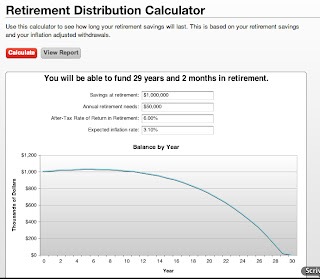
Retirement
Calculators Period
One of the dumbest things a young working person could do is
not plan for retirement unless they plan to work until they take their last
breath.
Some good bookmarks.
Home Budget
Calculator
Only way to know how much is going in and coming out. Knowing the real numbers may be astounding.

Check them all out at https://www.key.com/html/planning-center-calculators.html.*
*This post is not an endorsement of any financial institution. Lady Intelligence, Ltd. is not affiliated with the financial institution in any personal or professional manner.
Subscribe to:
Posts (Atom)